Jethur was built on a straightforward observation: while firms expand through new processes, tools and systems, few invest in the underlying foundations that hold everything together. The name ‘Jethur’—meaning roots—reflects the company’s purpose, not a branding exercise.
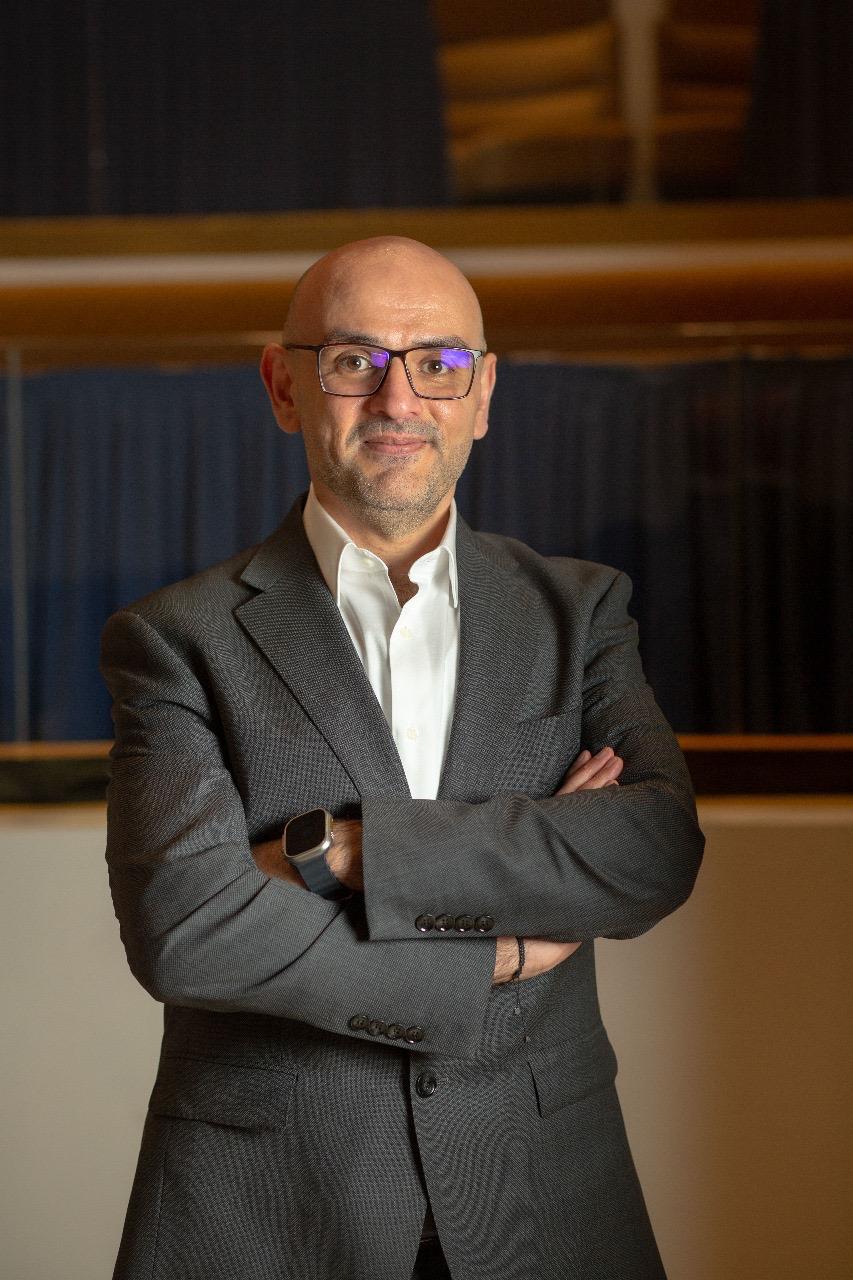
Founder and CEO Hatem Alboush spent years working across complex technology programs in regulated sectors, and he saw the same pattern everywhere: siloed functions relying on disconnected systems.
“Risk worked alone. Compliance worked alone. Cyber worked alone. Audit worked alone. And leadership had no single truth to depend on,” said Alboush. “The more digital the world became, the more painful these gaps were.”
The inspiration for Jethur came from watching otherwise strong institutions struggle because their foundations weren’t unified. Alboush believed that if governance, risk, compliance, security and continuity could share a single backbone, organizations would gain clarity and resilience. “That’s where Jethur began, not as a product, but as a philosophy,” he said.
This connects directly to the meaning of the company’s name. “If you think about the lifecycle of any organization, its real strength doesn’t come from the surface: not from the dashboards, not from the reports, not from the meetings. It comes from what is happening beneath all of that,” said Alboush.
In GRC, he stressed, this foundation is critical. When policies, controls, risks and evidence are misaligned or scattered, the entire structure becomes vulnerable.
“Roots represent stability, continuity, and truth. That’s exactly what GRC should represent,” he explained. “Our philosophy naturally pushed us toward the GRC space, because this is the part of the organization that determines whether the rest of the business can grow safely and confidently.”
Jethur technology
Jethur is a unified operating platform for GRC, cybersecurity, continuity and audit.
“Instead of building separate modules that behave like different products, we designed a single backbone, we call it RootX, where every element in the organization can be connected: controls, risks, policies, assets, third parties, incidents, BIAs, KRIs, and evidence,” said Alboush.
Modular suites were built on top of this backbone— RootCyber for cyber GRC, RootBCM for business continuity, RootCorp for enterprise risk, RootAM for audit and RootS for strategy—each plugging into the same shared structure.
“Technically, the platform is API-first, microservice-based, and designed for both cloud and on-premises deployments. We built it this way because regulated organizations often need flexibility, data residency, segmentation, hybrid environments, all those matters.”
Yet the real differentiator, he emphasized, is the unified data model, which enables a risk raised in operations to connect instantly to controls in compliance, incidents in cyber or findings in audit. “This is what creates clarity, and clarity is what organizations have been missing,” he said.
Critical market gap
Asked what market gap made a unified platform necessary, Alboush pointed to the dominance of point solutions— excellent individually, but collectively problematic.
“Compliance teams bought one tool. Cyber bought another. Risk bought a third. Audit bought a fourth. Suddenly the organization had a beautiful set of disconnected products. And each of these products had its own logic, its own definitions, its own interpretation of controls and risks.”
As organizations grew, so did fragmentation. The gap wasn’t the absence of tools—it was the absence of unification.
“What organisations needed was not another module, they needed a single source of truth, with one language, one structure, and one story behind the data. Something that prevented duplication, removed inconsistency, and made regulatory alignment possible across jurisdictions,” he said. “That gap was big enough to build an entire company around.”
The One Platform
Jethur’s One Platform model, designed to unify siloed functions, also delivers tangible ROI.
“ROI is not just about cost savings. ROI is about clarity, speed, and confidence,” Alboush said. When companies operate multiple systems, they spend more time reconciling inconsistent data than analyzing risks. They duplicate assessments, repeat control maintenance across several tools and prepare for audits manually because evidence lives everywhere.
One Platform eliminates this. Instead of paying for integrations, extra licences and reconciliation tasks, organizations work from one dataset, one operational language and one classification system.
“Controls are mapped once. Risks are interpreted consistently. Evidence is captured and reused. Incidents automatically connect to the related risks and processes.
This creates ROI not just in cost, but in leadership visibility, regulatory readiness, and strategic alignment,” said Alboush. “Teams finally operate in the same rhythm. That alignment is the real return.”
AI/ML for risk intelligence
For Jethur, AI is a tool of precision, not replacement.
“We don’t want AI to ‘replace judgment.’ GRC still requires human understanding. But AI can absolutely remove the heavy, repetitive, manual tasks,” said Alboush.
The company’s AI and ML models support evidence classification, anomaly detection, risk-scoring pattern recognition, early detection of control weaknesses and extraction of regulatory obligations.
This shifts compliance from reactive checklists to something predictive. “The goal is simple: Let the machine handle the noise so humans can focus on what matters— interpretation, decisions, and action,” he said.
Expertise and versatility
Balancing regional expertise with global adaptability is essential in RegTech.
“We grew in a region with very active regulators, the market moves fast, and expectations are high,” said Alboush. This shaped a platform built for real-time regulatory change, complex mappings and multi-framework environments.
But he knew Jethur couldn’t remain regional. “If you want to build a true RegTech platform, you must understand the regulatory ecosystems in Europe, APAC, Africa, and North America.”
The company addressed this through a dual-layer structure: a global foundation aligned with universal standards, and a localization layer that allows regional frameworks to be added without disrupting the core model.
“This keeps the platform flexible enough for global organizations while preserving the precision needed for local compliance,” he said.
Scaling challenges
Each region brings its own complexity: Europe’s data protection depth, APAC’s operational resilience, the US’s audit rigor and board accountability, and the GCC’s cybersecurity and national frameworks.
“Our biggest challenge is ensuring the platform remains simple even when regulations are not. On the technology side, it’s about scaling while maintaining performance, security, and transparency. On the regulatory side, it’s about staying ahead of emerging obligations, especially as regulators move toward continuous supervision and digital reporting,” Alboush said.
The future vision
For Alboush, Jethur’s vision has always extended beyond software.
“We want to build a platform that gives organizations clarity and confidence, the kind that allows them to operate with purpose, not fear of what they can’t see,” he said. “Everything we have built, and everything we dream about building, is the result of a team that believes in this mission with a kind of dedication that you rarely see.”
Jethur aims to shift GRC from something reactive and burdensome to something intelligent, connected and almost effortless. The firm wants leaders to operate in a world where decisions reflect truth, risks are understood early and compliance becomes an integrated habit.
Looking ahead, the company is pushing toward deeper practical AI, real-time regulatory adaptation, a global regulatory engine that understands regional nuances, seamless organizational integrations and a stronger ecosystem of partners.
Alboush concluded, “But above all, our vision is rooted in something very human: the belief that organizations deserve foundations they can trust. We are unapologetically ambitious, because the world of governance and risk is changing faster than ever. And we want Jethur to be the platform that helps institutions stay ready, stay resilient, and stay ahead.”
Keep up with all the latest RegTech news here
Copyright © 2026 RegTech Analyst
Copyright © 2026 RegTech Analyst