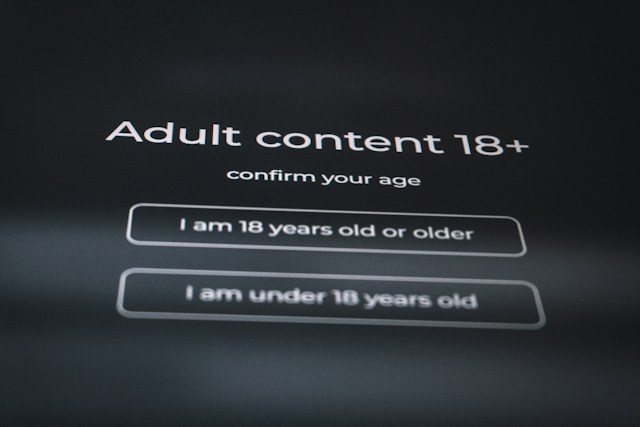
The days of the “I am 18+” checkbox are over. According to identity verification specialist Identomat, regulators across the UK, EU, US and Australia have shifted from issuing guidance to actively enforcing age assurance rules, with penalties that now include fines tied to global revenue, licence revocation and service blocking.
For businesses in gaming, adult content or age-restricted retail, Identomat warns that the challenge lies in fragmentation. Rules differ not only by country but by industry vertical, creating a compliance patchwork that is moving quickly, particularly since 2025.
In the UK, Ofcom enforcement under the Online Safety Act 2023 is now live. From 25 July 2025, relevant services were required to comply with Protection of Children rules, including highly effective age assurance. Ofcom has already acted, fining Kick Online Entertainment SA £800,000 in February 2026 and Youngtek Solutions Ltd £500,000 in May 2026. Identomat notes that Ofcom requires methods to be technically accurate, robust, reliable and fair, and explicitly rules out self-declaration. Fines can reach £18m or 10% of qualifying worldwide revenue, whichever is greater. Online gambling sits under a separate regime overseen by the UK Gambling Commission, which requires age and identity verification before customers can gamble, deposit or access free-to-play games.
The EU is pursuing a more privacy-focused path. Article 28 of the Digital Services Act requires platforms accessible to minors to protect their privacy, safety and security, with breaches carrying fines of up to 6% of global annual sales. The European Commission’s age verification blueprint, which became feature-ready in April 2026, lets users prove they meet an age threshold without revealing their identity. The Commission aims for EU-wide availability by the end of 2026, alongside the rollout of European Digital Identity Wallets.
The US remains a state-by-state patchwork. Following the Supreme Court’s June 2025 ruling in Free Speech Coalition v. Paxton, which upheld Texas HB 1181, at least 27 states had enacted adult-content age verification laws as of September 2026. Identomat stresses that permitted methods vary, and not every state demands a government-issued ID. Online gambling adds further complexity, with minimum ages differing by state and product.
Australia, meanwhile, introduced a world-first ban on under-16s holding social media accounts from 10 December 2025, with platforms facing civil penalties of up to AUD $54.6m for failing to take reasonable steps.
So what does a compliant flow look like? Identomat points to six core capabilities: document-based verification, biometric liveness detection, age verification as a first-pass filter, privacy by design, audit trails with ongoing monitoring, and jurisdiction detection. A single global flow built around the most permissive market, the firm cautions, will fail in the strictest.
The commercial tension is real. Heavy friction drives abandonment, and Identomat argues the answer is a tiered, risk-based approach. Its modular stack combines ID verification, liveness checks, face match, AML screening and manual review, with an Adaptive Orchestration layer that adjusts verification depth by risk, geography and regulatory context.
The winners, Identomat concludes, will not be those with the most restrictive flows, but those with the most intelligent ones.
For more, read the full report here.
Copyright © 2026 FinTech Global
Copyright © 2026 RegTech Analyst