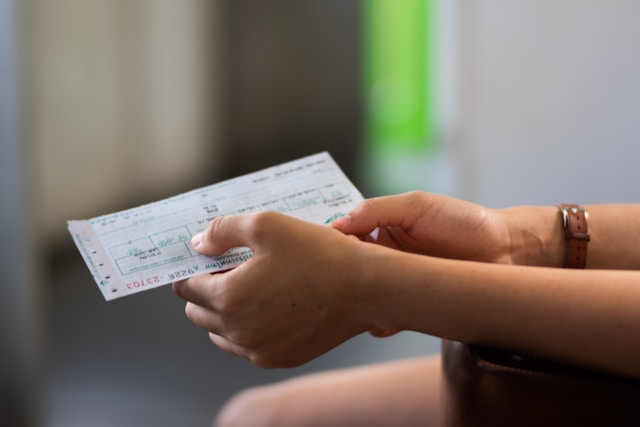
Check fraud has stubbornly refused to die. Despite decades of predictions that paper cheques were heading for obsolescence, the crime now accounts for 30% of all fraud losses in the US, second only to debit card fraud.
Hawk, which offers AI tools to help firms combat financial crime, recently delved into the check fraud trends in 2026.
Between 2021 and 2023, suspicious activity reports related to check fraud surged by 90%, and the trend shows little sign of reversing.
Recent headlines illustrate the scale of the problem. Memphis police charged a woman for depositing a stolen plumbing company cheque altered and cashed for more than $6m. Separately, the Secret Service helped dismantle a New York criminal syndicate that used fraudulent cheques to steal over $20m in construction materials. In perhaps the most brazen attempt on record, four men in Florida tried to cash a US Treasury cheque worth $27m.
For financial institutions still relying on legacy detection systems, the message is clear: adapt or keep losing.
Mail theft remains the easiest entry point
Organised criminals continue to target USPS collection boxes, residential mailboxes and, increasingly, postal carriers themselves, it said.
The theft of so-called “arrow keys”, which grant access to multiple mailboxes across entire neighbourhoods, has become particularly widespread. In one case, a Florida mail carrier was arrested attempting to sell USPS arrow keys and nearly $550,000 in stolen cheques to undercover agents. A separate postal employee was charged with stealing more than $1.6m in cheques.
Between February and August 2023 alone, financial institutions reported $688m in suspicious activity tied to mail theft-related check fraud, with FinCEN receiving over 15,000 Bank Secrecy Act reports citing the same issue during that period, Hawk highlighted. The United States Postal Inspection Service recovers over $1bn in fraudulent cheques and money orders each year.
To counter this, banks are turning to anomaly detection models that establish behavioural baselines for each account, flagging deviations in transaction location, timing, and deposit amounts. Typology-specific models trained on known check fraud patterns, as well as cross-rail monitoring that tracks activity across ACH, wire, card, and cheque channels, are also proving effective.
Dark web marketplaces industrialise stolen cheques
The business model underpinning check fraud has fundamentally shifted, Hawk noted. Stolen cheques are no longer used once by the individual who took them. Instead, they are photographed and distributed through organised marketplaces on dark web platforms and encrypted messaging applications. According to research from Recorded Future, half of all stolen cheque images are posted on dark web platforms within eight days of theft.
The scale is staggering. Researchers tracked 1.9 million stolen US bank cheques posted across more than 700 Telegram channels in 2024, with nearly 1 million stolen cheque images appearing on dark and clear web platforms during the same year.
AI-powered computer vision models are now being deployed to analyse signatures by calculating their mathematical shape and stroke vectors, detecting subtle deviations from known profiles, it said. Entity graph tools that map relationships between accounts, devices, and deposit locations are also helping institutions identify fraud rings operating across multiple accounts or institutions.
Mobile deposit convenience becomes a fraudster’s tool
Mobile Remote Deposit Capture (MRDC) was designed to make banking more convenient. It has also made check fraud significantly easier. With no in-person interaction to raise suspicion, MRDC has become the preferred method for double presentment schemes, where the same cheque is deposited at multiple institutions, as well as for exploiting washed or digitally altered cheques.
Behavioural biometrics, which analyse patterns such as typing rhythm, mouse precision, and device tilt, are helping banks distinguish legitimate users from automated fraud software. Device intelligence tools that track device IDs, IP addresses, and geolocation further complement these defences.
AI-generated forgeries lower the barrier to entry
A newer and particularly concerning development is so-called “check cooking”, Hawk said. This is a fully digital form of forgery that requires no physical access to a cheque and no chemicals. Using generative AI tools, advanced photo-editing software, and a standard home printer, fraudsters can now produce highly convincing forgeries capable of bypassing traditional verification processes.
Image forensics powered by machine learning models trained on millions of cheque images can detect subtle signs of digital alteration invisible to human reviewers, comparing handwriting, printed text, fonts, and layout against expected norms. These tools can also identify mismatches between numeric and written amounts, flagging inconsistencies before a transaction completes.
Copyright © 2026 FinTech Global
Copyright © 2026 RegTech Analyst